

Running injuries don’t just happen: they’re usually preventable. Most runners get hurt because they do too much too soon, ignore their body’s warning signs, or skip the strength work that keeps them healthy.
The good news? You can sidestep common injuries like shin splints and runner’s knee with some smart adjustments.
Let’s break down what actually works.
Why Running Injuries Happen: The Most Common Types

Because running involves repetitive, high-impact movements, your body’s tissues, muscles, tendons, and ligaments, experience constant stress that can lead to injury if you don’t manage it carefully.
Research shows injury statistics are sobering: 37-56% of runners sustain injuries yearly.
Your knees bear the brunt, followed by ankles, lower legs, and feet. Common symptoms include inflammation from micro tears in soft tissues.
Runner’s knee, shin splints, Achilles tendinitis, and plantar fasciitis rank among the most frequent complaints.
These injuries develop when you don’t allow adequate healing time between runs. Understanding why injuries happen helps you take preventative action before pain starts.
Increase Mileage Safely: The 10% Rule Explained
One of the most effective ways to dodge those common injuries we just discussed is to increase your running distance strategically.
The 10% rule guides you here: never boost your weekly mileage by more than 10% each week.
If you’re running 20 miles weekly, aim for 22 miles next week. This gradual progression lets your muscles, tendons, and ligaments adapt without micro tears or inflammation.
Through consistent mileage tracking, you’ll notice how your body responds. You’ll spot fatigue signals early.
This approach builds endurance safely, protecting your running future. Pairing this strategy with a sustainable daily habit ensures you maintain consistent training without overcommitting your schedule.
Master Your Running Form and Choose Proper Shoes
While your mileage increases gradually, your running form and footwear become even more critical to staying healthy.
Your running posture should be upright with a slight forward lean and relaxed arm swing.
Maintain an upright posture with a slight forward lean and keep your arm swing relaxed for efficient running form.
Land midfoot or forefoot to reduce joint stress and boost efficiency.
Maintaining consistent breathing patterns throughout your run helps sustain your pace and prevents cramping.
For footwear selection, choose shoes designed specifically for running. They provide essential shock absorption and stability.
Guarantee proper fit: your longest toe should lightly touch the front with adequate wiggle room. This prevents blisters and discomfort.
Replace shoes every 9-12 months or after 250-500 miles.
Quality footwear and solid form work together, protecting your body while you serve your running goals.
Recognize Warning Signs Before Injury Strikes
How’s your body really feeling during and after your runs?
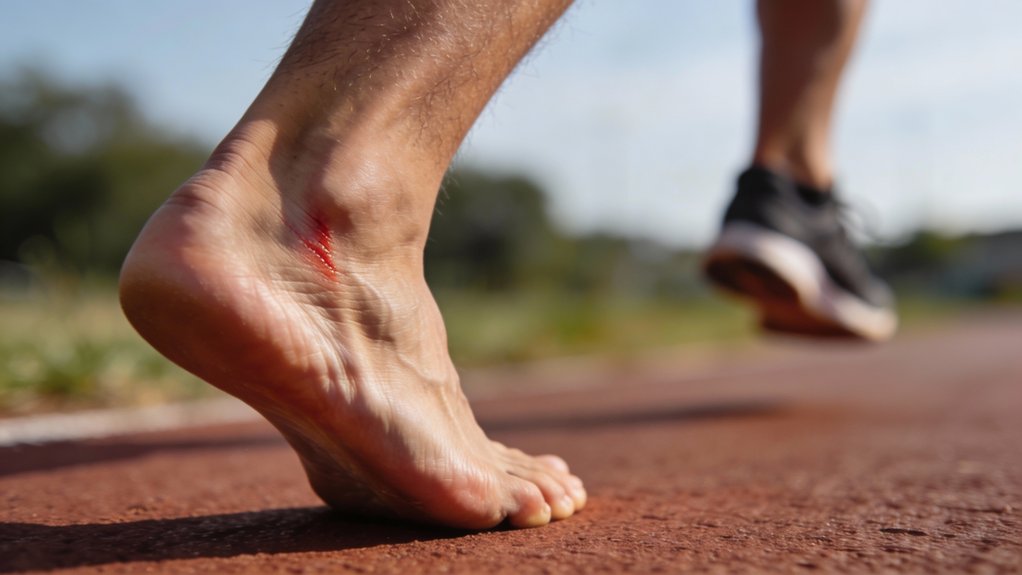
Pain awareness matters for injury prevention. Persistent discomfort during or after running signals overuse and demands rest.
Watch for swelling, tenderness, or stiffness around knees, ankles, and feet: these injury signals warrant immediate attention.
Notice performance changes too. If you can’t complete your usual distance or feel unusually fatigued, your body’s telling you something’s wrong.
Changes in running form, like altered stride or posture, also indicate developing problems. Poor posture and instability increase your injury risk, so maintaining improved posture through core strengthening is essential.
Track soreness lasting beyond normal recovery times. When unusual fatigue persists, you’re at genuine injury risk.
Catching these warning signs early prevents serious damage and keeps you running strong.
Build Strength in Your Core and Hips
Now that you’re tuned into what your body’s telling you, it’s time to build the foundation that prevents those warning signs from ever appearing.
Strengthening your core and hip strength reduces strain on your knees and lower back during runs.
Strong core and hip strength minimize knee and lower back strain, protecting your running form.
Start with core exercises like planks and bridges to maintain proper posture.
Add single-leg movements: lunges and step-ups, to fix muscle imbalances in your hips.
These exercises directly improve your running mechanics and efficiency.
You’ll use energy more effectively and lower your injury risk considerably.
A consistent routine targeting these areas transforms how your body handles the demands of running.
Balance Hard Workouts With Strategic Recovery Days
Balance Hard Workouts With Strategic Recovery Days
Training hard every single day won’t make you a better runner, it’ll just wear you down.
You’ll actually improve faster by strategically balancing workout intensity with recovery techniques.
Include at least one complete rest day weekly so your tissues repair properly and prevent stress fractures or tendinitis.
Increase your running distance no more than 10% each week.
On recovery days, try cross-training like swimming or cycling to build overall fitness while protecting vulnerable muscles.
Listen closely to your body during workouts and dial back intensity when needed.
Pair these practices with solid sleep, hydration, and nutrition for maximum injury prevention.
Prevent Overtraining With Cross-Training and Flexibility Work

While rest days give your body time to repair, you’ll also need to keep moving on those recovery days, just in smarter ways.
Cross training benefits include maintaining cardiovascular fitness while reducing repetitive strain.
Consider these activities:
- Cycling builds leg strength without pounding joints
- Swimming develops full-body endurance safely
- Walking provides low-impact movement
- Elliptical training protects knees and ankles
Flexibility exercises matter equally. Stretching and yoga enhance muscle elasticity and joint mobility, addressing tight areas that cause compensatory movements.
Runners incorporating these practices experience fewer injuries.
Combine cross training with flexibility work weekly to prevent overtraining while staying active and supporting your long-term running goals.
Recent Comments