

Most beginners make the mistake of running too fast right out the gate, which kills their motivation within days.
Here’s the thing: you don’t actually need to run continuously to become a runner. The run-walk method, alternating between short bursts of running and walking breaks, builds your fitness while keeping you from burning out.
Start with realistic goals like three 20-minute sessions weekly, and you’ll set yourself up for actual success.
Set Realistic Goals Before You Start

Ambition is great, but it’s also the biggest trap for new runners.
You’ll serve yourself better by setting realistic goals that prevent burnout and injury.
Establish specific, measurable targets like running twenty minutes three times weekly. This goal setting creates a clear path for progress tracking.
Establish specific, measurable targets like running twenty minutes three times weekly for clear progress tracking.
Increase your running time or distance by only ten percent each week. Small, incremental changes build sustainable habits.
Adopt a “better than yesterday” mindset instead of comparing yourself to others.
Analyze your performances regularly and adjust goals accordingly.
This approach keeps you motivated while protecting your body from overtraining. Building sustainable daily habits through consistency and patience ensures your running routine becomes a permanent part of your lifestyle.
Master the Run-Walk Method for Your First Week
Now it’s time to ease into running with the run-walk method, a proven strategy that’ll build your endurance without overwhelming your body.
Start with two-minute running intervals followed by one-minute walking breaks. This gradual progression lets your cardiovascular system adapt safely.
Do this three times weekly, prioritizing comfort over speed. Remember that finding your comfortable speed is essential during these early stages, as pushing too hard too soon can lead to injury and burnout.
As weeks pass, increase your run intervals by one minute while keeping walking segments steady.
Listen carefully to your body’s signals. If discomfort arises, adjust your run-walk intervals to match your current fitness level.
This measured approach builds confidence and prepares you for continuous running sessions ahead.
Invest in Proper Running Shoes and Comfortable Clothing
As you build your running habit, what you wear matters just as much as how you train.
You’ll want proper running shoes specifically designed for your feet, not casual sneakers.
When shoe fitting, leave about a thumb’s width of space between your longest toe and the shoe’s end. This prevents discomfort during runs.
Replace shoes every 300 to 500 miles to maintain support.
For clothing materials, choose moisture-wicking, breathable fabrics that keep you dry and reduce chafing.
Prioritize fit and flexibility so you can move freely without distractions.
Don’t forget to invest in a proper sports bra for comfort and support during your runs.
These investments protect your body and improve your overall running experience considerably.
Warm Up Before and Cool Down After Each Run

Every time you lace up your shoes, you’re making a choice about how your body will perform and recover. Start with five to ten minutes of dynamic stretches like leg swings, high knees, and reverse lunges to activate your running muscles and increase blood flow.
This warm-up reduces injury risk and enhances performance.
After your run, walk for five to ten minutes to gradually lower your heart rate. Follow with static stretches targeting your major muscle groups.
These recovery techniques clear metabolic waste and reduce muscle soreness.
Building both warm-up and cool-down sessions into every run improves flexibility and supports better long-term performance.
Select Beginner-Friendly Routes to Build Confidence
Select Beginner-Friendly Routes to Build Confidence
The route you choose makes all the difference when you’re starting out. You’ll build confidence faster on flat, paved paths that feel safe and comfortable.
Community parks offer controlled environments free from traffic, letting you focus on your form.
Consider these route features:
- Flat terrain with minimal elevation changes to build endurance gradually
- Well-maintained trails in familiar areas where you feel secure
- Scenic routes through local parks that keep running enjoyable
Use running apps to discover beginner-friendly paths with user reviews and difficulty ratings.
Start with shorter distances on these routes. As your fitness improves, you can gradually explore new terrain and challenge yourself further.
Give Your Body Recovery Time Between Runs
Rest days aren’t laziness, they’re when your body actually gets stronger. Your muscles need time to rebuild after running stress. Aim for one or two rest days weekly as essential recovery strategies.
Listen to your body; if you feel pain or exhaustion, take extra time off. The rest importance can’t be overstated: skipping recovery leads to burnout and injury.
Follow the 10% rule: don’t increase weekly mileage beyond 10%.
On rest days, try light walking or gentle stretching to boost blood flow without straining yourself. These active recovery techniques reduce soreness while keeping you engaged in your running journey.
Log Your Runs to Track Distance and Consistency
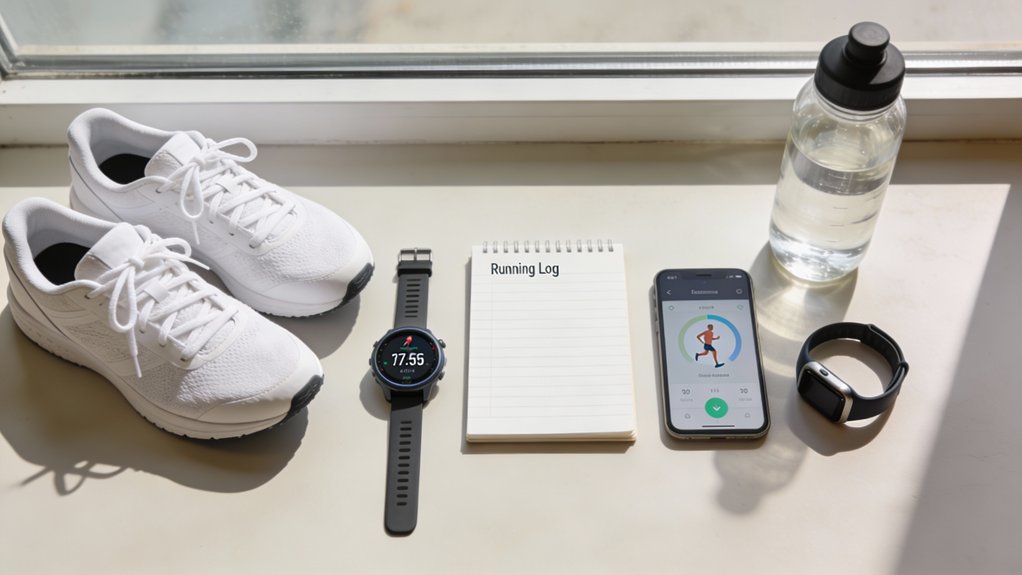
Now that you’re giving your body the recovery it needs, you’ll want to document what you’re actually doing on your running days.
Logging your runs creates accountability and reveals patterns you’d otherwise miss.
Logging your runs builds accountability and uncovers patterns that transform your training into measurable progress.
Apps like Strava and Runkeeper track your performance metrics effortlessly, showing distance, duration, and frequency over time.
Consider recording:
- Your feelings and energy levels after each run
- How different conditions affect your performance
- Weekly distance totals to follow the 10% rule safely
Consistent logging transforms raw data into motivation.
You’ll see real progress accumulate.
This documentation helps you stay injury-free while building genuine momentum in your running journey.
Find Your Running Tribe for Accountability and Encouragement
Find Your Running Tribe for Accountability and Encouragement
Why do so many runners stick with their training while others quit after a few weeks? Community makes the difference.
Finding running partners and joining local clubs transforms your routine into something sustainable. You’ll show up because someone’s counting on you.
Group runs build accountability naturally. Whether you’re hitting the track with a buddy or joining a club’s weekly sessions, you’re creating commitment through connection.
Shared goals strengthen your resolve. You’ll push harder, laugh more, and stay motivated when others believe in your progress.
Your running tribe isn’t just company, it’s your foundation for lasting success.
Recent Comments