
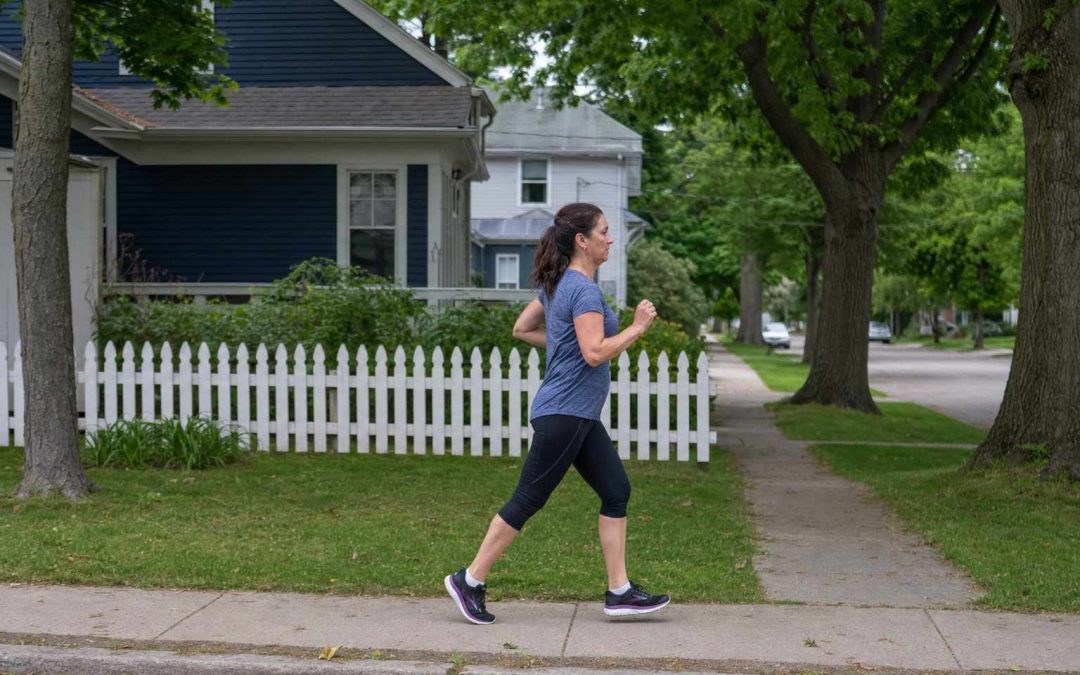
Running alone is something most women do, most of the time.
The quiet worry before a first solo run is real. So is the way that same run, repeated a few times, stops feeling like a big deal at all.
Yes, it is okay to run alone. And the confidence to do it well is something you build, not something you either have or you do not.
Confidence is built by repetition, not willpower
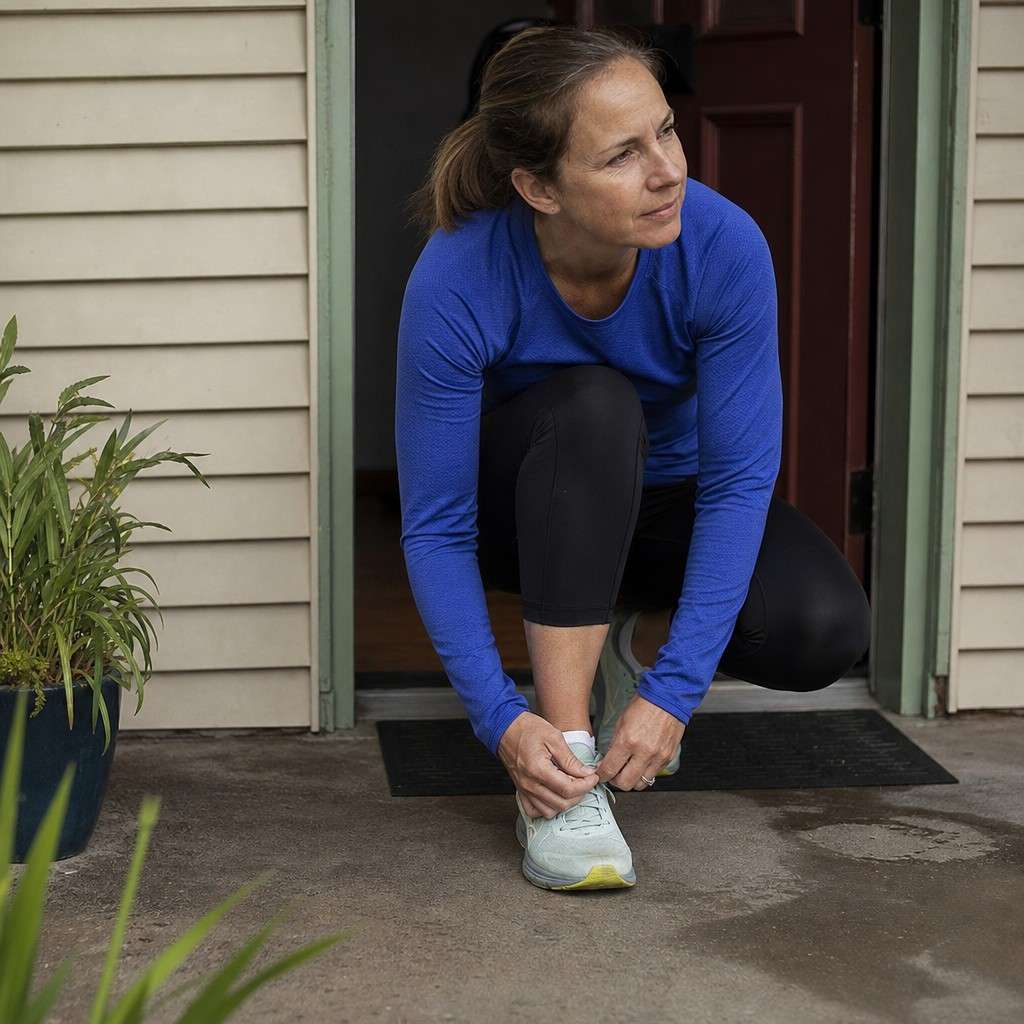
The clearest path to feeling comfortable running solo is the most obvious one: do it, then do it again, on ground you already know.
Start with a short loop in your own neighborhood, in daylight, at a time when other people are around.
Not because you need a crowd. Because familiarity takes the mental effort out of the route itself, and that frees your head to relax.
A few things happen quickly when you repeat the same loop:
- The street layout stops requiring active thought.
- You recognize the dog that barks at the corner, the neighbor walking his kids to school.
- The route becomes background, and you move to the foreground.
Once that first loop feels ordinary, widen from there: add a block, try a nearby park, go a little earlier or later. Confidence accumulates the way fitness does, in small increments that do not feel like much at the time.
Awareness is not the same as anxiety
There is a meaningful difference between the two, and getting it clear changes how a run feels.
Anxiety is exhausting. It is constant scanning, rehearsing bad outcomes, checking over your shoulder every thirty seconds. It makes the run feel like work, and it does not actually make you safer.
Calm awareness is the opposite. It is low-effort, ambient attention: noticing who is around you, noting an alley before you pass it, registering when something feels off. It runs in the background while you enjoy the run.
The goal is not hypervigilance. It is the same relaxed attentiveness you bring to driving a familiar road.
Most runs are uneventful. The more you run alone, the more your nervous system learns that. The mental movie of worst-case scenarios gets quieter because it keeps failing to match reality.
Trust your instincts when they do fire. If something feels off, adjust without needing a reason. Change direction, slow down, move to a busier stretch. You do not owe anyone an explanation for a gut feeling.
Your posture and pace say you belong there
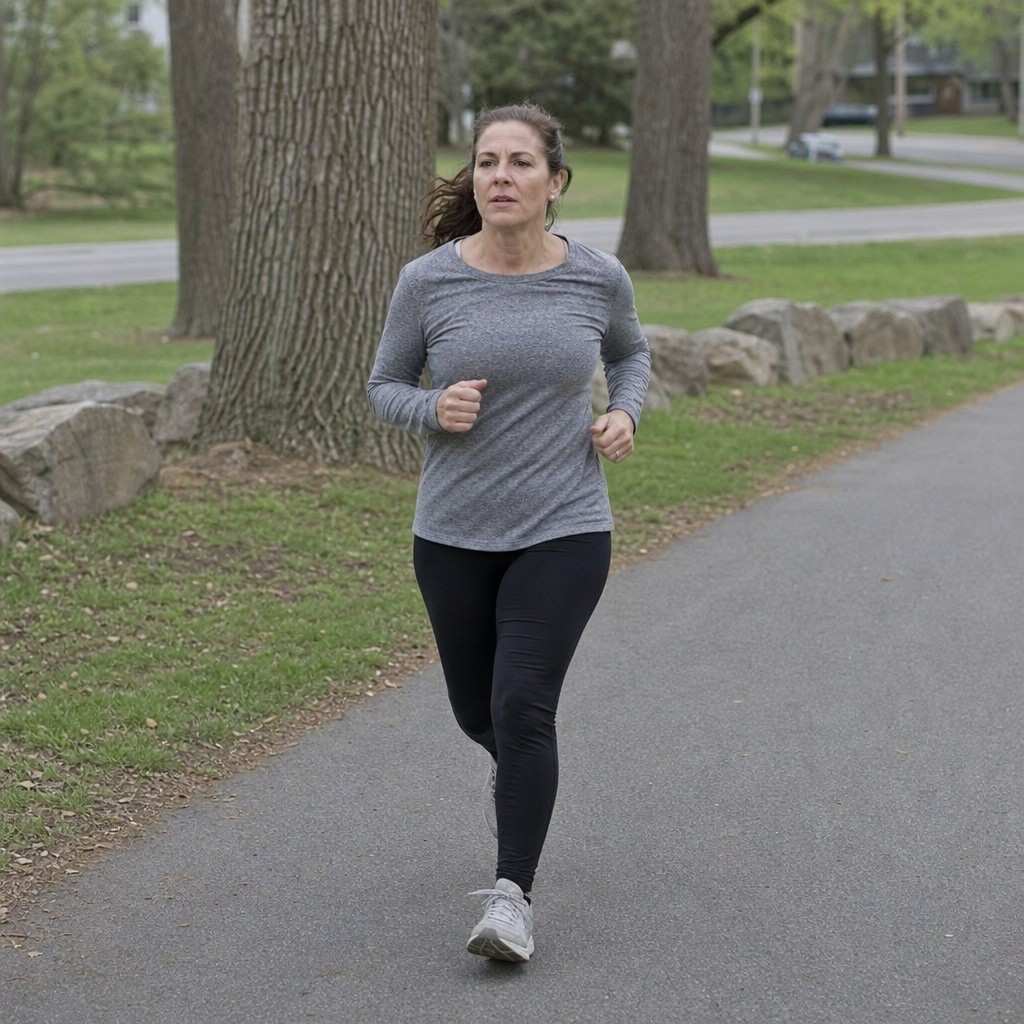
Confidence is partly physical, and it shows.
Running upright with your eyes forward and a steady pace communicates something simple: you know where you are going, and you are comfortable being there. That is not a performance. It is just what confident movement looks like.
A few practical notes:
- Earbuds are fine on most routes. One earbud out is a reasonable standard for quieter paths or low-traffic stretches at dawn.
- A steady pace is more grounding than rushing. If you feel nervous, slow down a little rather than speeding up.
- Checking your phone over and over does the opposite of signaling composure. Save the playlist fiddling for a stop.
You belong on the route. That is not something to convince yourself of in the mirror before you head out. It is something you feel after you have done the run a handful of times.
A few habits clear the mental load
The reason most experienced solo runners stop thinking about safety on every outing is not that they stopped caring. It is that their habits handle it, so they do not have to.
Telling someone your route and your expected return time is the simplest one. A quick text takes ten seconds, and it means your head is free for the entire run.
Knowing your route in advance removes another layer of low-grade noise. And running in daylight while you build your comfort is not a rule you follow forever, it is just where most people start. For the full set of practical safety habits worth making automatic, that piece covers the logistics in detail.
The goal is to just run
Confidence is not the absence of any nervousness. It is what happens after you have run alone enough times that the nervousness has nothing to attach to.
If you are earlier in your running life and still figuring out the basics, starting solo can feel like a lot at once. Pick the smallest, most familiar version of the run. Do that. Repeat it until it is boring.
Most runs end exactly as they start: uneventfully. The clearest way to feel that in your body is to gather the evidence yourself, one ordinary outing at a time.
Running alone is normal. It will feel that way to you too.