
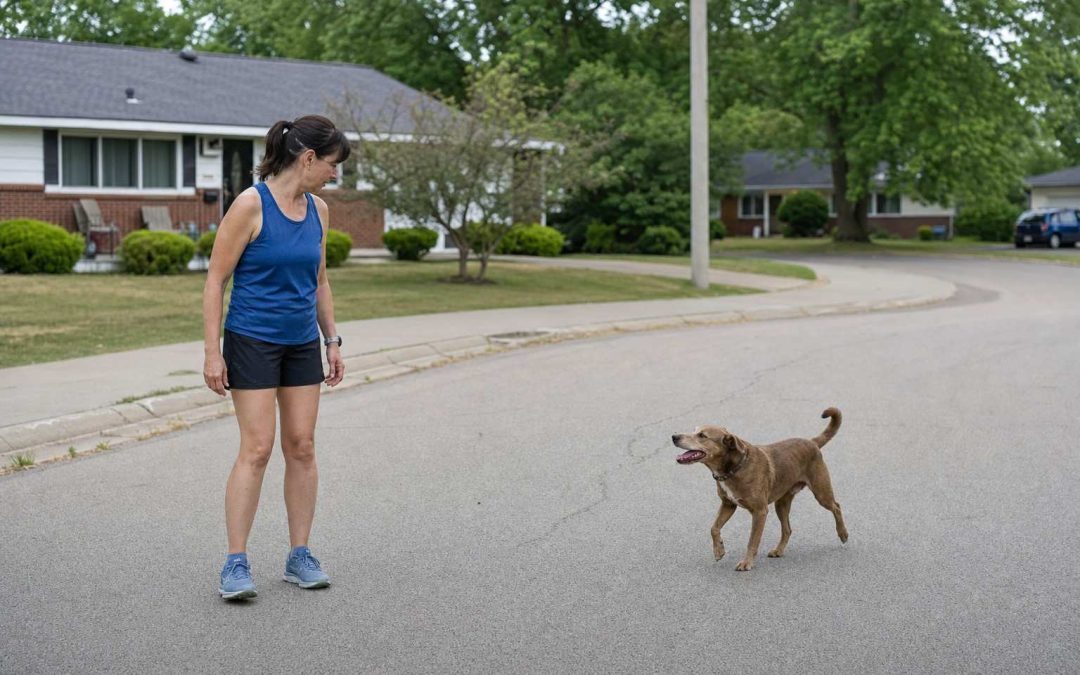
Running past dogs is part of running outside.
Most of the time, the whole encounter is a leashed dog straining toward you with a wagging tail while its owner apologizes. You give it a little space, slow for a moment, and carry on.
The single most useful thing to know is this: do not sprint away from a loose dog. Running triggers a chase instinct in almost every dog. Slowing down or stopping is the move that keeps a curious dog from becoming a nuisance.
What most encounters actually look like
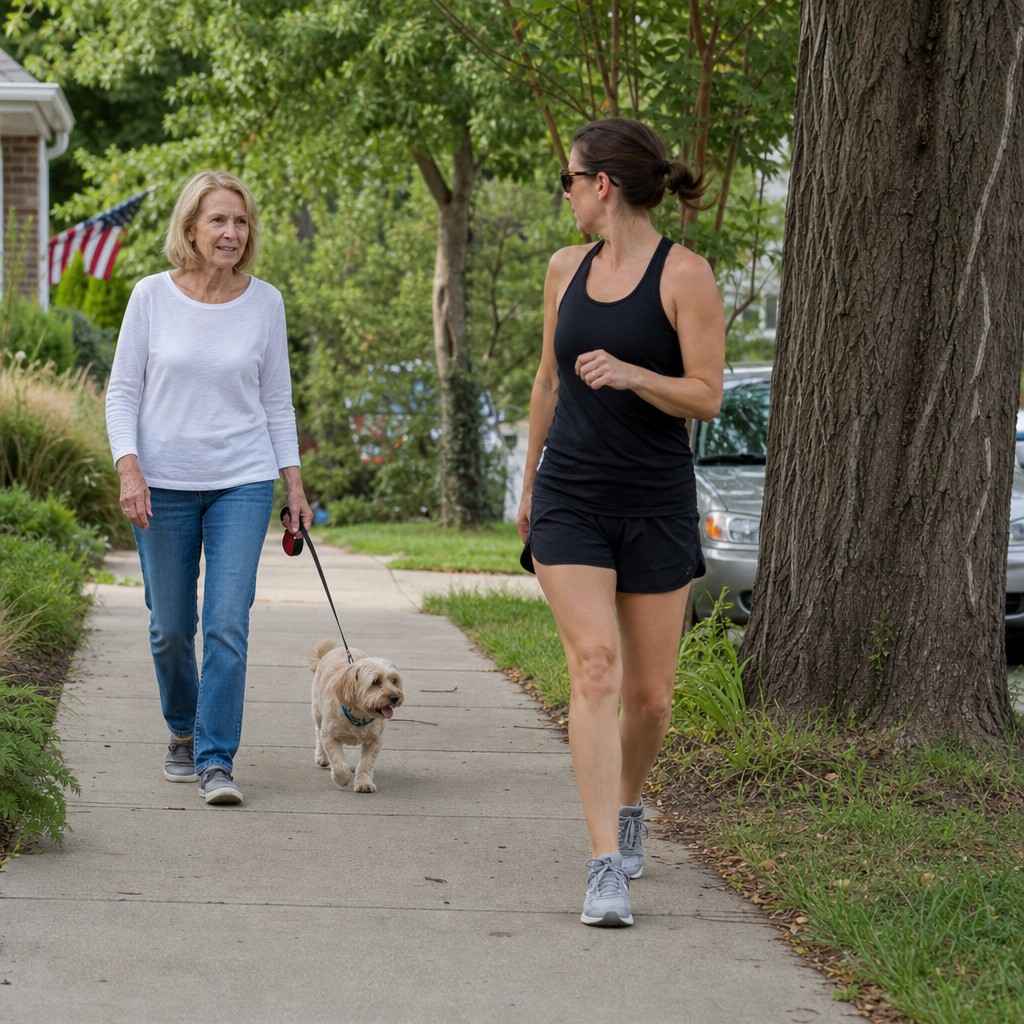
Most of what you meet is completely ordinary.
The dog behind the fence that barks every time you run past is announcing your presence, not threatening you. The leashed golden retriever at the park needs nothing more than a wide berth and a slow walk for a few seconds.
For a leashed dog, just:
- Slow to a walk as you approach
- Give a few extra feet of space
- Resume your pace once you are past
That covers the vast majority of everything you will ever meet on a run.
When a dog is loose
A loose dog that trots toward you is almost always curious. The way you carry yourself in the next few seconds shapes how the whole thing goes.
Stop moving or slow to a walk. Do not bolt.
Stand tall and turn your body slightly side-on rather than squaring up directly. Avoid a hard, sustained stare into the dog’s eyes, because that reads as a challenge. Keep your voice low, calm, and firm.
A confident “No” or “Go home” works more often than you would expect.
If you need to create distance, back away slowly while keeping the dog in front of you. Do not turn your back to run. Put something between you and the dog if it helps: a parked car, a tree, your water bottle held out, a jacket off your arm.
A few habits that remove the guesswork
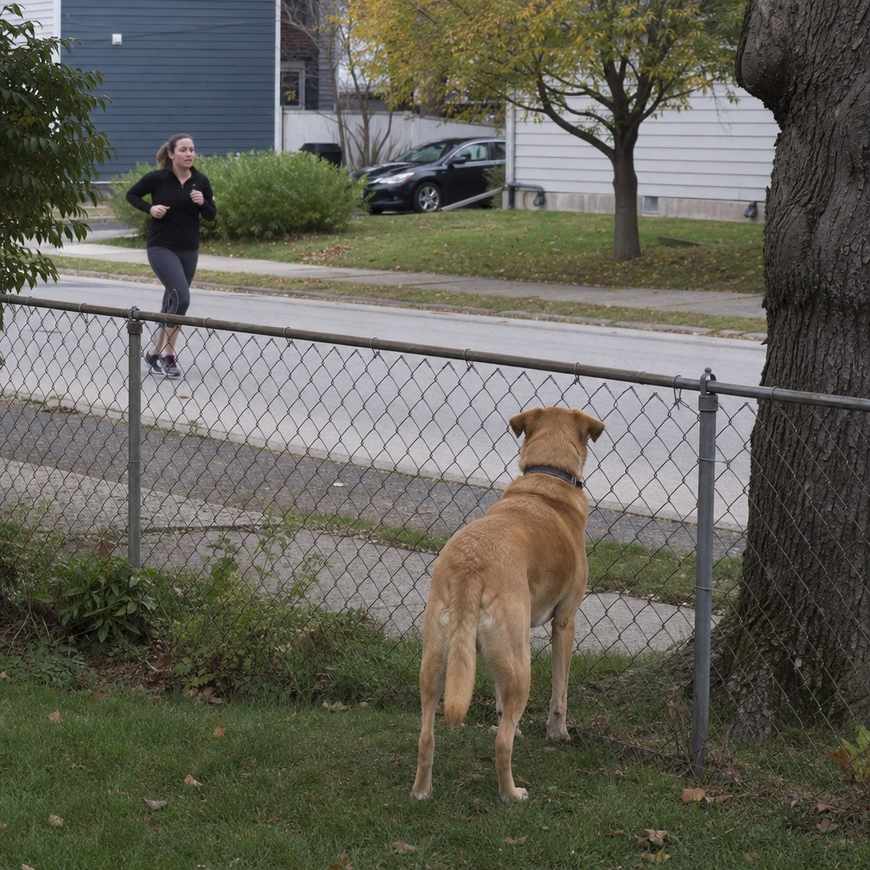
A known problem dog is a route problem, not a running problem.
If a particular yard has a dog that regularly gets loose, the simplest fix is to loop around that block. Varying your route occasionally, which also overlaps with the general safety habits worth building into your running, removes the situation entirely.
Some runners carry a small citronella spray. It is not a requirement, and most runners never need one. If having it in your pocket makes you feel more at ease, that is a legitimate reason to carry it.
What actually handles most situations:
- A calm, steady voice
- Stopping or slowing instead of bolting
- Using the space around you, like parked cars, posts, and distance
- Backing away slowly, facing the dog
The rare bite
Bites are uncommon. If one does happen, get yourself away from the dog first, then deal with the wound.
Clean it thoroughly with soap and water. This is general information, not medical advice, and a bite that breaks the skin should be seen by a doctor.
Reporting the incident to local animal control gives them a record, and noting the address helps if you can manage it.
Carrying the right mindset out the door
A dog on your route is almost never a reason to cut a run short or avoid a street you love. The habits above take almost no extra thought once they are part of how you move through the world.
Stay calm, slow down when you need to, and trust yourself to read the situation. The more you run, the more second nature this becomes, and trusting your instincts is one of those skills that sharpens with every mile.
Most dogs you meet are just dogs. And most runs end exactly the way they started.