
Open almost any fitness app right now and you will be told to train with your cycle: push hard in one phase, ease off in another, and your body will reward you.
It is a tidy story.
The research behind it is far less tidy. The largest review to date pooled the studies on the menstrual cycle and exercise performance in women with regular cycles. Published in the journal Sports Medicine in 2020, it reached a blunt conclusion.
The average effect of cycle phase on performance was, in the researchers’ own word, “trivial.”
There may be a small dip in the days around your period. On average it is minor, and it varies enormously from one woman to the next.
That points to something more useful than any generic plan.
What the evidence actually says
The 2020 review was careful, not dismissive. It did not say the cycle never matters.
It said the average effect is small, and the underlying studies are mixed in quality. Any guidance, the authors argued, should fit the individual rather than a blanket rule.
In other words, your own pattern beats any template built from group averages.
In practice that means:
- For most women, most of the time, you can run the way you feel like running.
- A generic phase-based calendar is unlikely to match your real experience.
- The plan worth having is the one drawn from your own notes, not an app’s default.
This is genuinely hard to find in the usual search results, which lean hard on the cycle-syncing pitch.
Why so many women feel the opposite
If the measured effect is small, why does it feel so real? Because symptoms are real, even when the performance hit is not.
A 2021 study in the British Journal of Sports Medicine surveyed 6,812 exercising women. The large majority dealt with recurring cycle symptoms, an average of around eleven of them, from cramps and fatigue to mood changes.
Those symptoms were linked to feeling less able to train and compete.
Notice the gap. How you feel and what a stopwatch measures are not the same thing.
Both are valid. Feeling wiped out on the first day of your period is a real reason to take it easy. It is not evidence that your fitness has dropped, and it is not a rule you have to schedule your life around.
A simpler approach than cycle-syncing
Instead of following someone else’s phase chart, track your own and let your body lead.
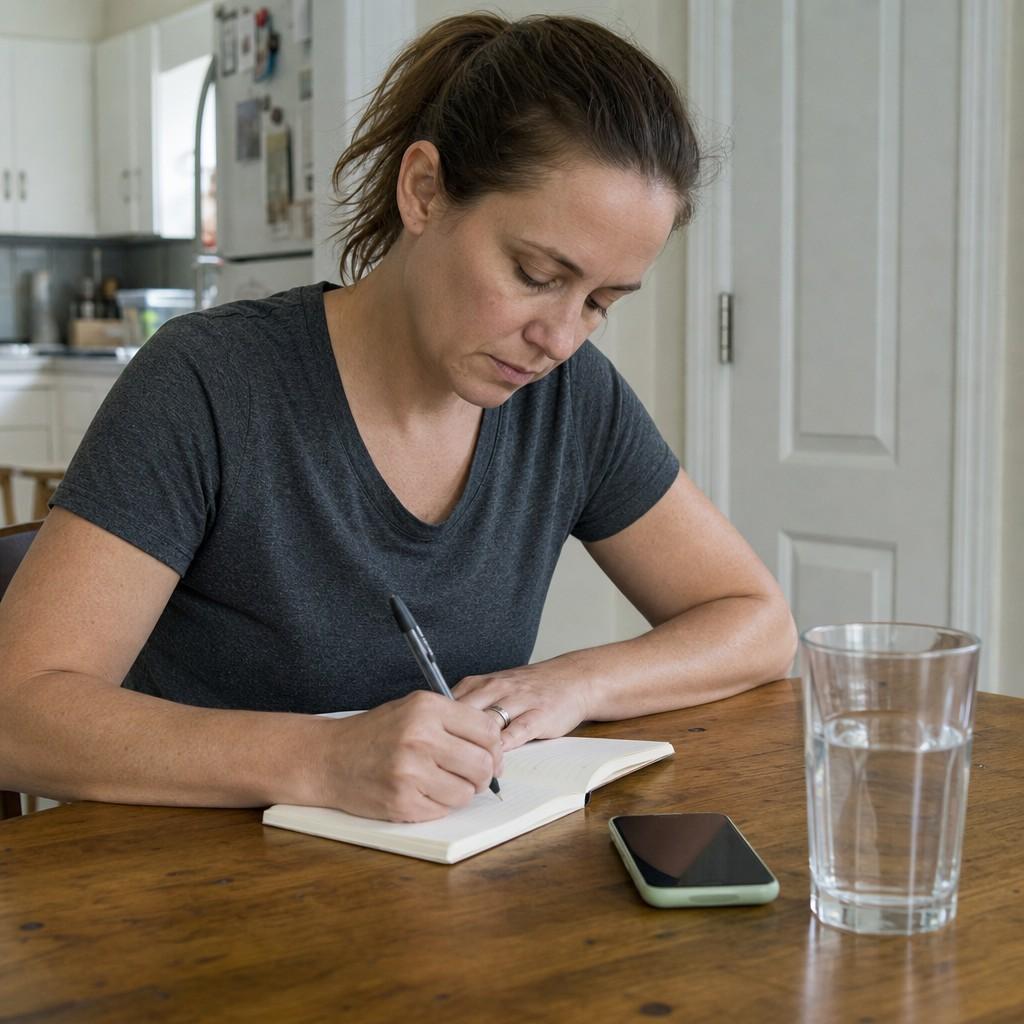
You are the only reliable data source for your own cycle. A month or two of light notes will tell you more than any app’s default plan.
- Note how runs feel alongside where you are in your cycle: energy, mood, sleep, effort.
- Look for your pattern, not the one you were promised. Many women find a couple of low days and otherwise no clear effect.
- On the days you feel flat, drop to an easy run-walk or a shorter loop instead of skipping.
- Keep the overall habit steady through the month.
That last point is the one that matters most. It is the same principle behind building a running habit that sticks: the plan that survives real life is the one that flexes with it.
If running through cramps makes a day genuinely miserable, move the hard effort and keep the easy miles. You lose nothing over a month by being flexible across a few days.
One signal worth taking seriously
There is one cycle-and-running link that is not about performance, and it does matter: periods that stop or turn very irregular.
When training load is high and fueling runs low, periods can become irregular or disappear.
That is not the sign of a well-tuned plan. It is a signal the body is under more stress than it can support, with real consequences for bone and long-term health.
This is general information, not medical advice. If your period changes noticeably or stops, that is worth a conversation with your doctor rather than something to push through.
For most women, though, the cycle is not a problem to engineer around. It sits in the background, the same way sleep and stress do.
The takeaway
The marketing wants the cycle to be complicated, because complicated sells plans and apps.
The evidence is calmer. On average, the phase of your cycle barely moves your running, and the smartest plan tracks your own body, not a chart built from strangers.
Run the way you feel most weeks, and ease off on the days you genuinely need to. Keep the habit steady across the month, and watch for the one signal, a disappearing period, that is actually worth acting on.
That is close to the whole plan. And it holds up at any age.