
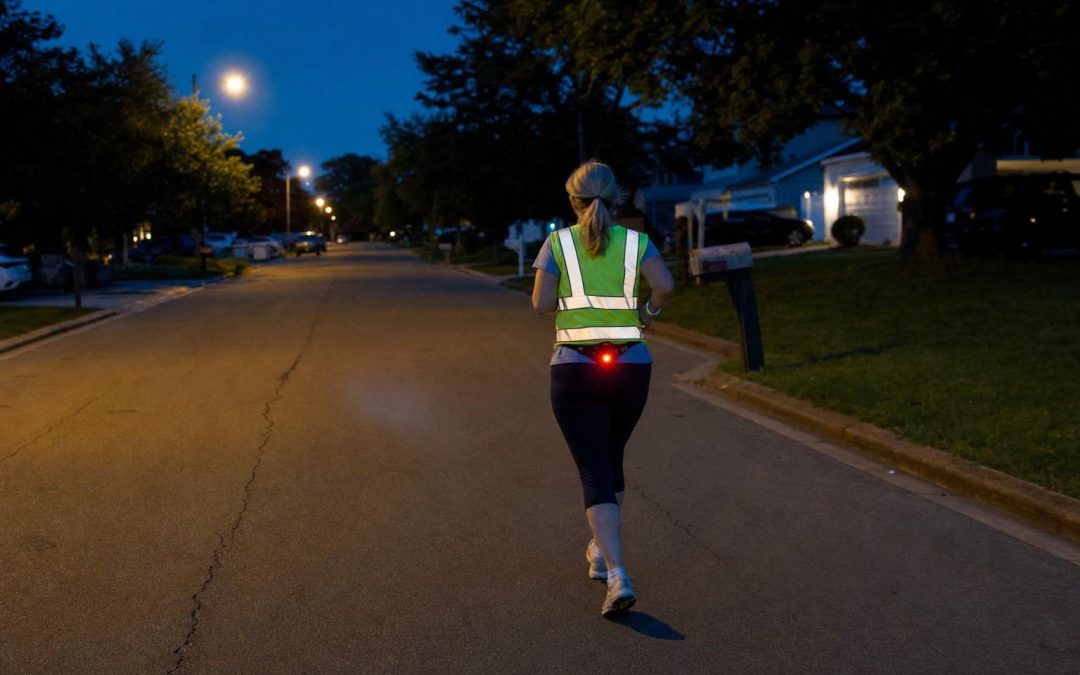
Running in the dark is not a different kind of running. It is the same run, with one extra variable: light.
The whole game in low light is being seen. Everything else follows from that.
When the clocks change and dark arrives before and after work, many runners quietly stop going out. That is a shame, because the fix is genuinely simple.
Gear that makes you visible
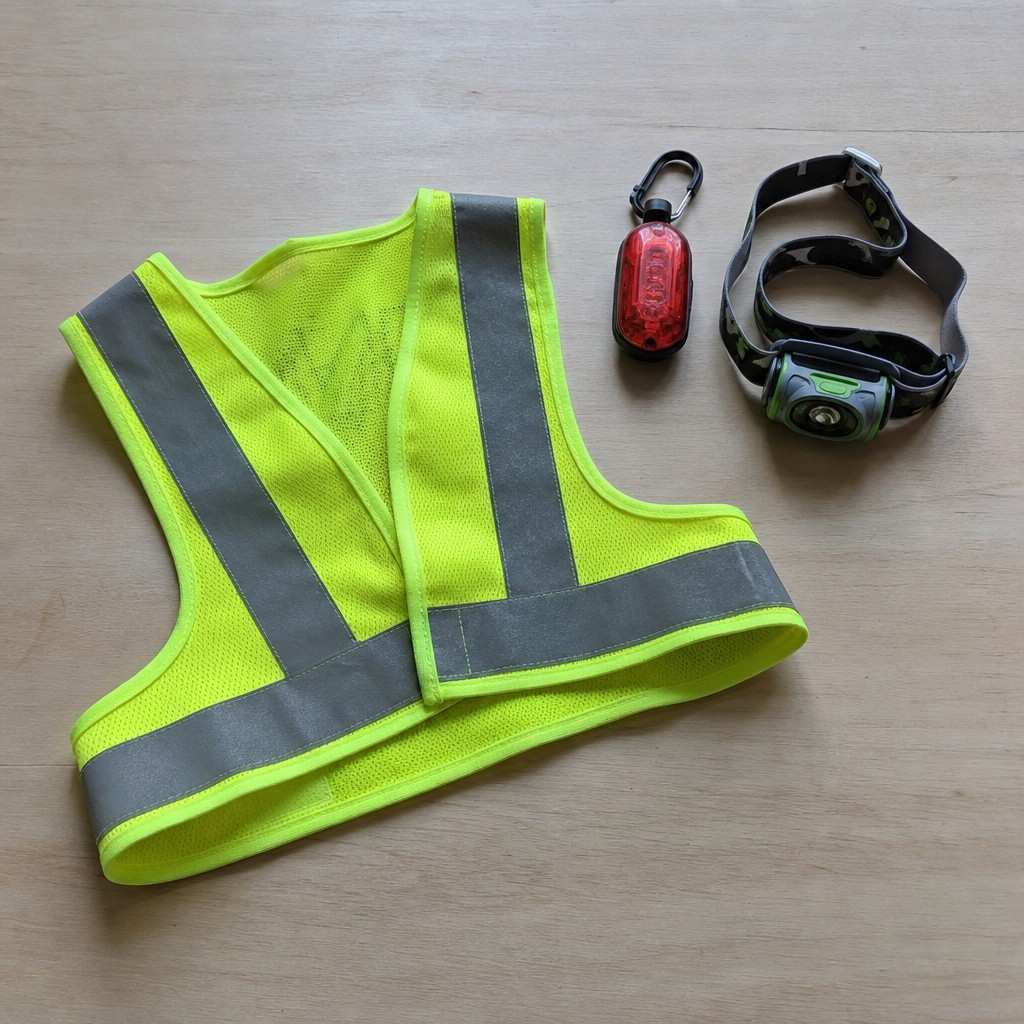
Drivers can see reflective material from far longer distances than dark clothing, even on a well-lit street. This matters more than almost any other choice you make.
A few things that actually work:
- A reflective vest worn over your jacket or shirt
- A clip-on running light for your back, red, the same signal a bike uses
- A headlamp on your head, not in your hand
The headlamp is the most useful single item on that list. It does two things at once: oncoming drivers see your face lit up from a distance, and you can see the cracked sidewalk two blocks from your house that always catches people off guard.
If you want to see the range before buying, you can compare reflective vests and headlamps on Amazon to get a sense of what is available at different price points.
Being seen is not about looking a certain way. It is about giving drivers time to react.
The routes that work in the dark
Dark runs are not the moment to try a new path.
Stick to roads and trails you know well, where you have already learned the uneven patches, the narrow stretches, and the spots where sidewalks disappear. Familiar ground is easier to read by headlamp than it looks on a map.
Well-lit streets are worth the extra block. A lit route through a neighborhood beats a dark shortcut through a park, even when the shortcut is shorter.
Running so you face oncoming traffic is one of those habits worth making automatic. You see headlights before the driver sees you, which gives you time to step further onto the shoulder if you need to.
The trickiest thirty minutes
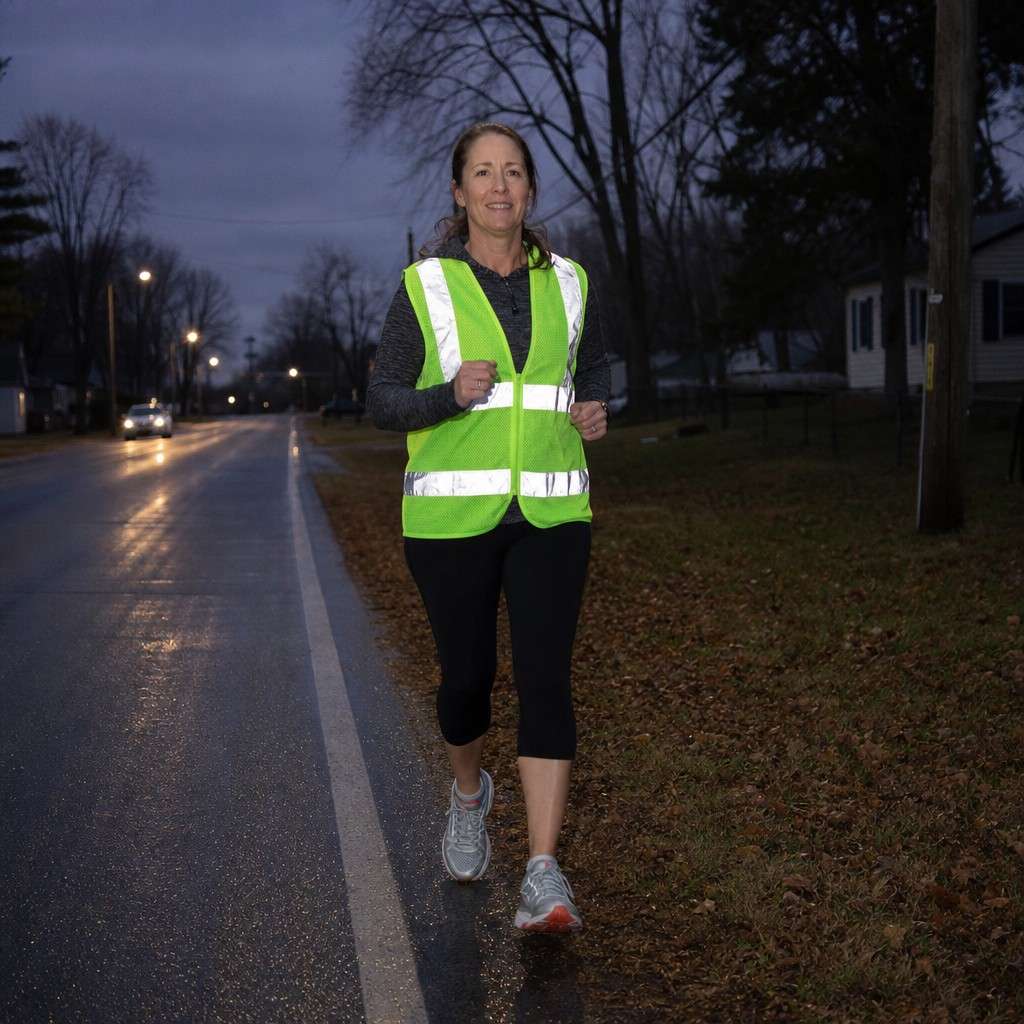
Most of the dark hours are actually easier than people expect.
The hard window is the thirty minutes around sunrise and sunset, not full dark. That is when drivers are looking into low sun and their eyes have not adjusted. Visibility drops for everyone on the road, including you.
If you can, shift your start time by twenty minutes to clear that window. If you cannot, go brighter. Add the clip light, pull on the vest, and keep to quieter streets for that stretch.
Full dark, once it settles, is predictable. Streetlights are on, headlights are obvious, and your headlamp cuts cleanly.
Keeping it calm and routine
The habits worth building for dark running mostly overlap with the everyday safety habits that apply to any outdoor run: tell someone your route, carry your phone, vary your timing so your schedule is not perfectly predictable. None of that changes in the dark. You are just adding visibility on top.
The goal is to make dark running unremarkable, not to turn it into a production. Pick up a vest. Charge the headlamp. Tell your partner or roommate you will be back in forty-five minutes.
A lot of runners find that the confidence that comes from running alone grows exactly when they stop treating certain conditions as exceptional.
Low light is a visibility problem. Solve it with gear and good route choices, and it stops being a problem at all. Your early-morning miles in November and your after-work miles in January are still yours.